














Artemis II Flight Day 6: Lunar Flyby Updates
Live lunar flyby updates for NASA’s Artemis II mission will be published on this page. All times are Eastern.
9:35 p.m.
The Artemis II crew has completed the mission’s lunar observation period and is now beginning the return trip home. On Tuesday, April 7, Orion will exit the lunar sphere of influence at approximately 1:25 p.m., at a distance of 41,072 miles from the Moon.
8:35 p.m.
Artemis II is now entering a solar eclipse that will last for about an hour as Orion, the Moon and the Sun align. During this phase, the crew will see the Sun disappear behind a mostly darkened Moon.
The crew will use the opportunity to study the solar corona — the Sun’s outermost atmosphere — as it glows around the lunar edge. They also will watch for flashes of light from meteoroids striking the surface, which could offer insight into potential hazards on the Moon.
7:24 p.m.
The Artemis II crew witnessed an Earthrise as Orion emerged from behind the Moon, moments before the Deep Space Network reacquired the spacecraft’s signal and restored communications.
7:02 p.m.
The Artemis II crew has reached the mission’s maximum distance from Earth at 252,756 miles, setting a new record for human spaceflight. This milestone places the crew 4,111 miles farther from Earth than the Apollo 13 mission in 1970.
7:00 p.m.
Orion has reached its closest approach to the Moon at about 4,067 miles above the lunar surface. At this point, the spacecraft is traveling about 60,863 miles an hour relative to Earth, but only 3,139 miles an hour relative to the Moon.
6:44 p.m.
As we prepare to go out of radio communication, we’re still going to feel your love from Earth. And to all of you down there on Earth and around Earth, we love you, from the Moon. We will see you on the other side.

Victor Glover
Artemis II Pilot
The Orion spacecraft has entered a planned communications blackout as it passes behind the Moon. For about 40 minutes, the lunar surface blocks the radio signals from NASA’s Deep Space Network on Earth needed to stay in contact with the crew.
Similar blackouts occurred during the Artemis I and Apollo missions and are expected when using an Earth-based communications system. Once Orion emerges from behind the Moon, the network will quickly reacquire the signal and restore communications with mission control.
6:41 p.m.
As Orion traveled behind the Moon, the crew witnessed an “Earthset” — the moment Earth dropped below the lunar horizon — marking another milestone in the mission’s lunar flyby.
The Earth will re-emerge at “Earthrise” from the opposite edge of the Moon in about 40 minutes.
4:40 p.m.
A lively stream of science observations from the crew throughout the flyby has been received with grins, nods, and lots of chatter in the Science Evaluation Room, where lunar scientists are supporting the observations in mission control. The crew reported color nuances, which will help enhance scientific understandings of the Moon. Shades of browns and blues that can be picked out with human eyes can help reveal the mineral composition of a feature and its age. As crew reports are received, the science team is updating the observation plan based on their follow up questions and sending up new guidance to the crew.
2:45 p.m.
Due to last approximately seven hours, the lunar observation period is the duration of time that the crew is close enough to the Moon to make impactful science observations (4,070 miles altitude at closest approach) and the spacecraft is oriented such that the windows are pointed at the Moon.
At the beginning of the window, as Orion approaches the Moon on the near side, the side we can see from Earth, people in parts of the eastern hemisphere can view some of the same features the astronauts will observe. These include future CLPS landing site Reiner Gamma, a bright, mysterious swirl the origin of which scientists are still trying to understand, and Glushko, a bright, 27-mile-wide crater known for the white streaks that shoot out from it for up to 500 miles.
1:56 p.m.
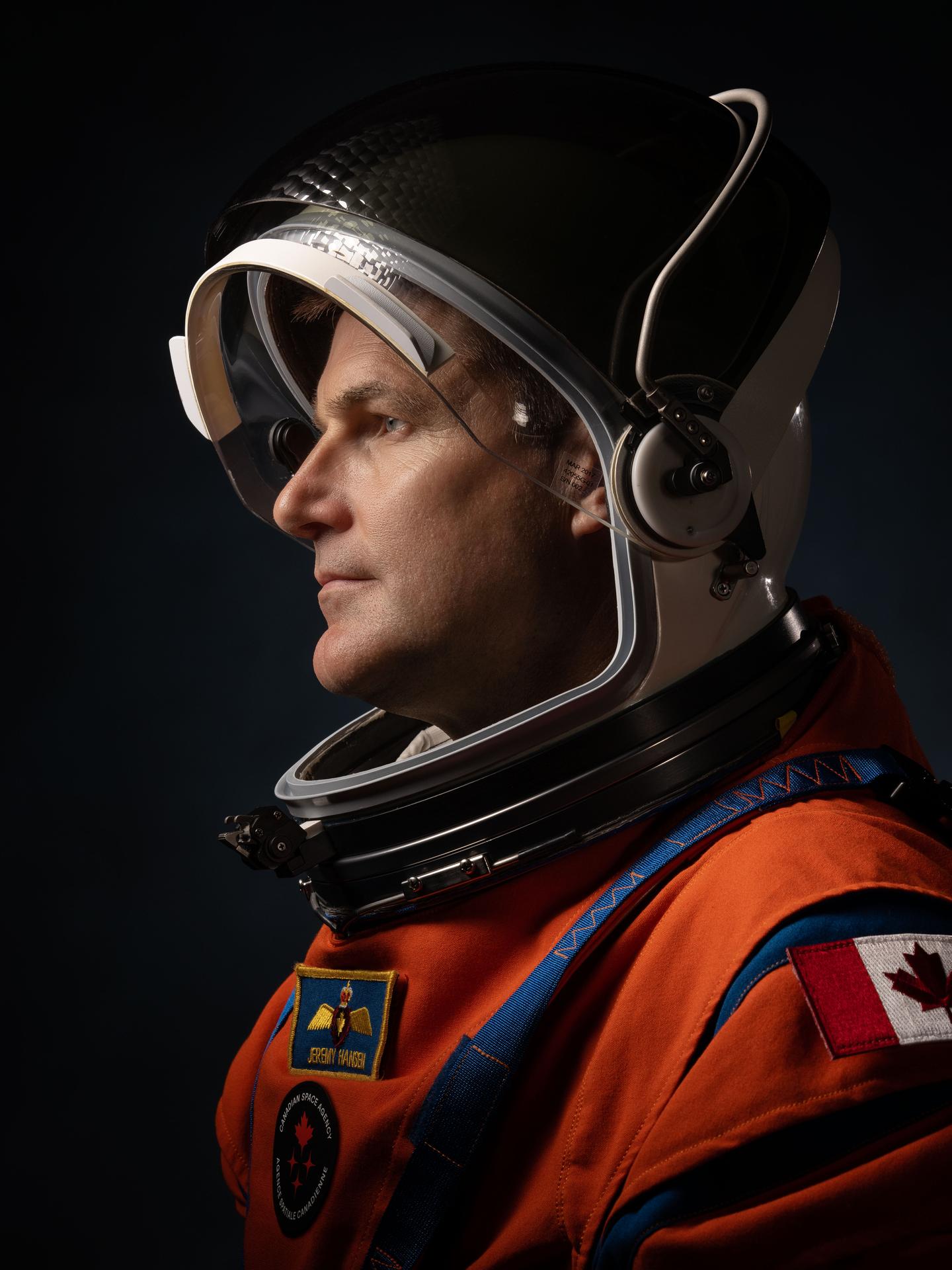
The Artemis II crew of NASA astronauts Reid Wiseman, Victor Glover, and Christina Koch, along with CSA (Canadian Space Agency) astronaut Jeremy Hansen have set the record for the farthest distance from Earth traveled by a human mission, surpassing the Apollo 13 record of 248,655 miles set in 1970.
As we surpass the furthest distance humans have ever traveled from planet Earth, we do so in honoring the extraordinary efforts and feats of our predecessors in human space exploration. We will continue our journey even further into space before Mother Earth succeeds in pulling us back to everything that we hold dear. But we most importantly choose this moment to challenge this generation and the next to make sure this record is not long-lived.
Jeremy Hansen
Canadian Space Agency (CSA) Astronaut and Artemis II Mission Specialist
NASA Flight Director Brandon Lloyd, Capsule Communicator Amy Dill, and Command and Handling Data Officer Brandon Borter also marked a lighthearted milestone today by emailing the crew what is now assumed to be the longest person-to-person message ever sent in human history.
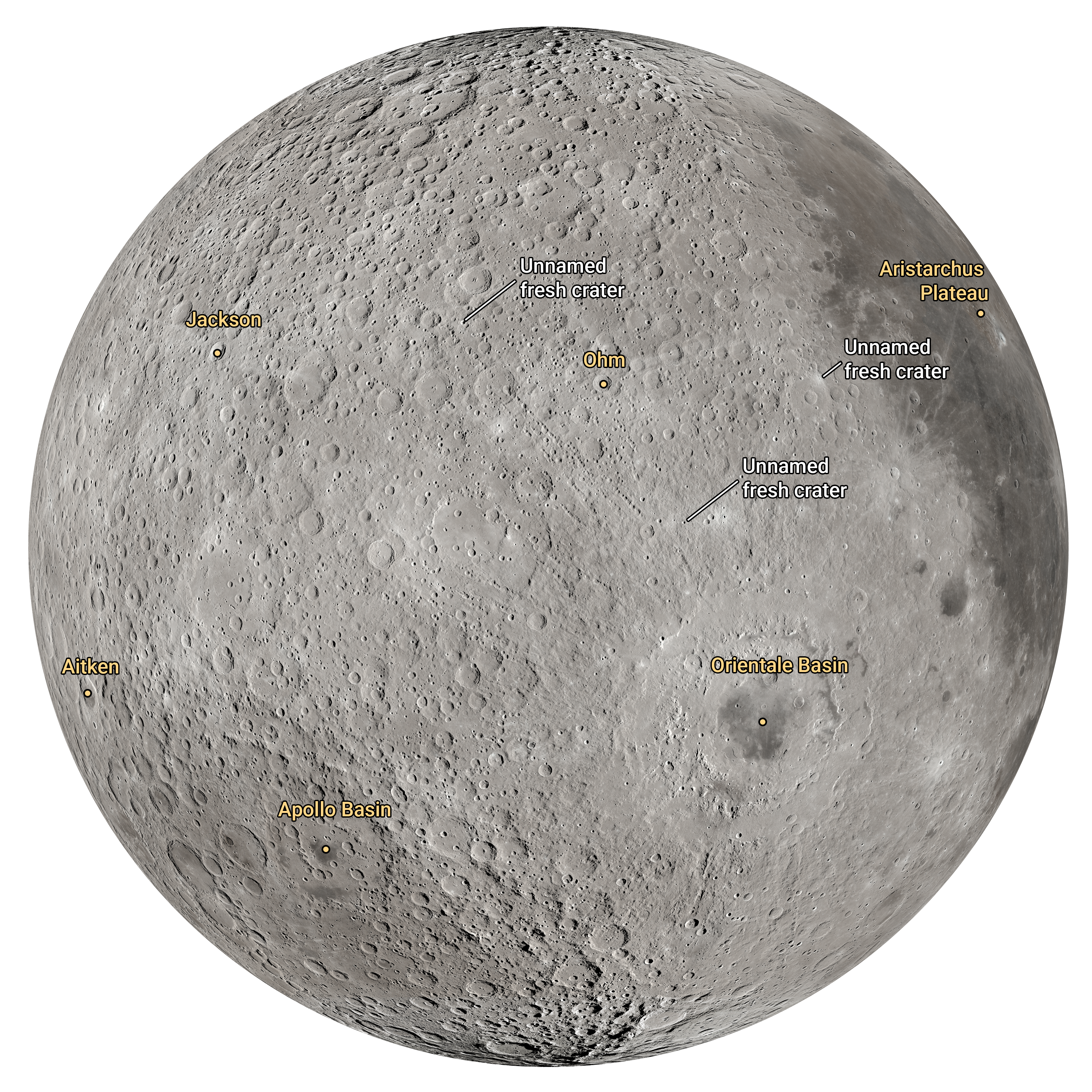
After breaking the record for human spaceflight, crew also took a moment to provisionally name a couple of craters on the Moon, noting they were able to see them with their naked eye.
Just northwest of Orientale basin highlighted above is a crater they would like to name Integrity after their spacecraft and this historic mission. Just northeast of Integrity, on the near and far side boundary, and sometimes visible from Earth, the crew suggested Carroll crater in honor of Reid Wiseman’s late wife, Carroll Taylor Wiseman. After this mission is complete, the crater name proposals will be formally submitted to the International Astronomical Union, the organization that governs the naming of celestial bodies and their surface features.

1:30 p.m.
NASA’s lunar science officer briefed the crew on their science objectives for the upcoming lunar observation period.
On April 5, the science team sent the crew the final list of 30 lunar surface targets, including the Orientale basin, a nearly 600-mile-wide crater that straddles the Moon’s near and far sides. This 3.8-billion-year-old crater formed when a large object struck the lunar surface and retains clear evidence of that collision, including dramatic topography in its rings. The crew will study Orientale’s features up close and from multiple angles as they pass by.
Hertzsprung basin also is on the crew’s list of targets. Northwest of Orientale, it is a nearly 400-mile-wide crater on the Moon’s far side. An older ringed basin, Hertzsprung offers a unique contrast to Orientale because its features have been degraded by subsequent impacts. By comparing the topography of the two craters, the crew’s observations will help scientists gain insight into how lunar features evolve over geologic timescales.
1 p.m.
NASA’s live coverage of the Artemis II lunar flyby is underway on NASA+, Amazon Prime, Apple TV, Hulu, Netflix, HBO Max, and Roku, alongside the agency’s 24/7 coverage on its YouTube channel. Learn how to stream NASA content through a variety of online platforms, including social media.
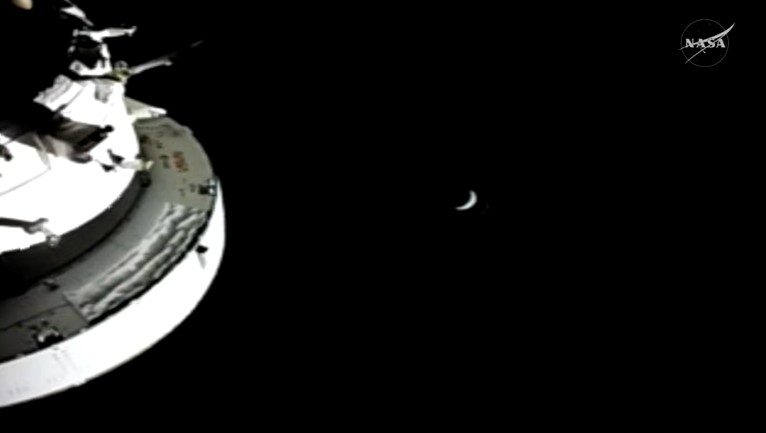
Coverage will include live views of the Moon from cameras mounted on Orion’s solar arrays. Image and view quality may vary throughout the lunar observation period due to distance from Earth, system limitations, and bandwidth across NASA’s communications network.
Note: The spacecraft will enter a planned communications blackout from 6:44 to 7:25 p.m. EDT as Orion passes behind the Moon. Spacecraft camera views will not be available during this time, but NASA’s live coverage will continue.
View the latest imagery from the Artemis II mission on our Artemis II Multimedia Resource Page. Please follow @NASAArtemis on X, Facebook, and Instagram for real-time updates. Live coverage of the mission is available on NASA’s YouTube channel.