








Great Observatories: James Webb Space Telescope
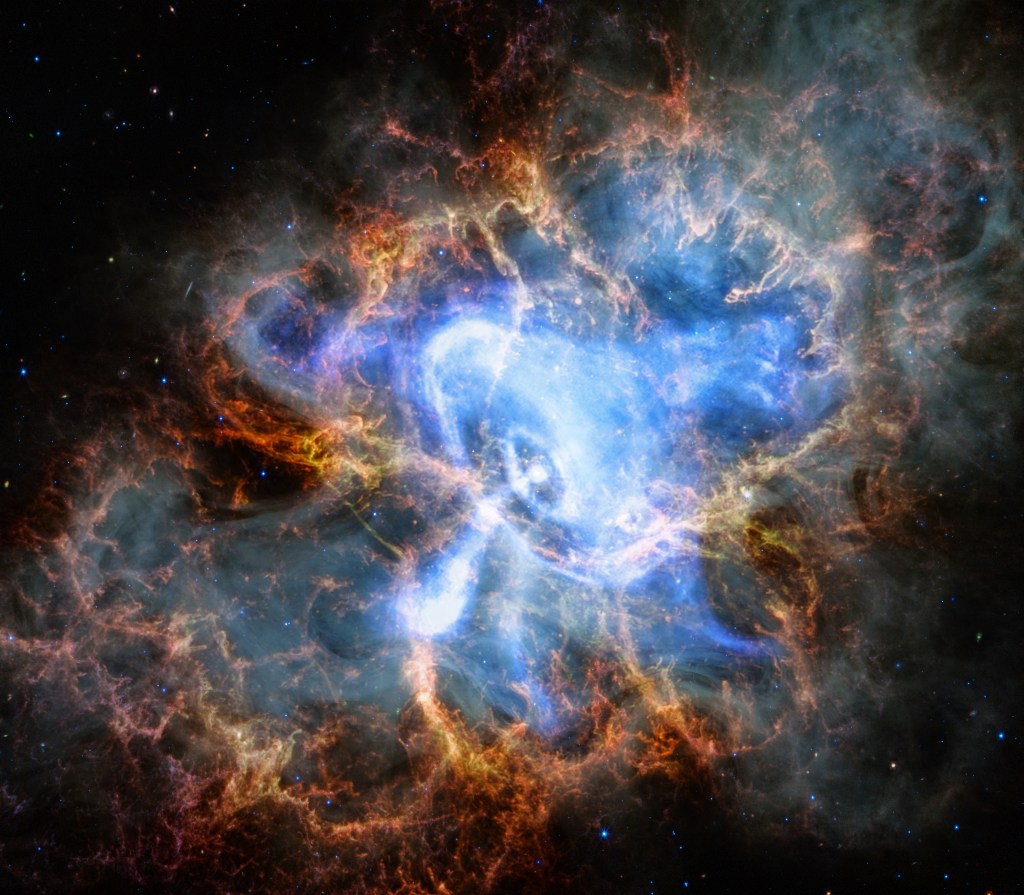
The James Webb Space Telescope is part of NASA's fleet of "Great Observatories," which also includes the Hubble Space Telescope and Chandra X-ray Observatory. Webb studies every phase in the history of our universe, ranging from the first luminous glows after the Big Bang to the formation of solar systems capable of supporting life on planets like Earth to the evolution of our own solar system.

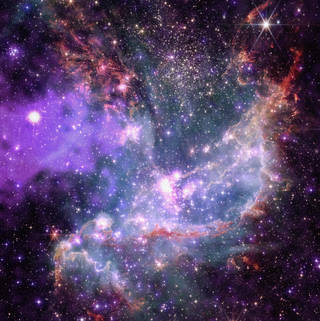
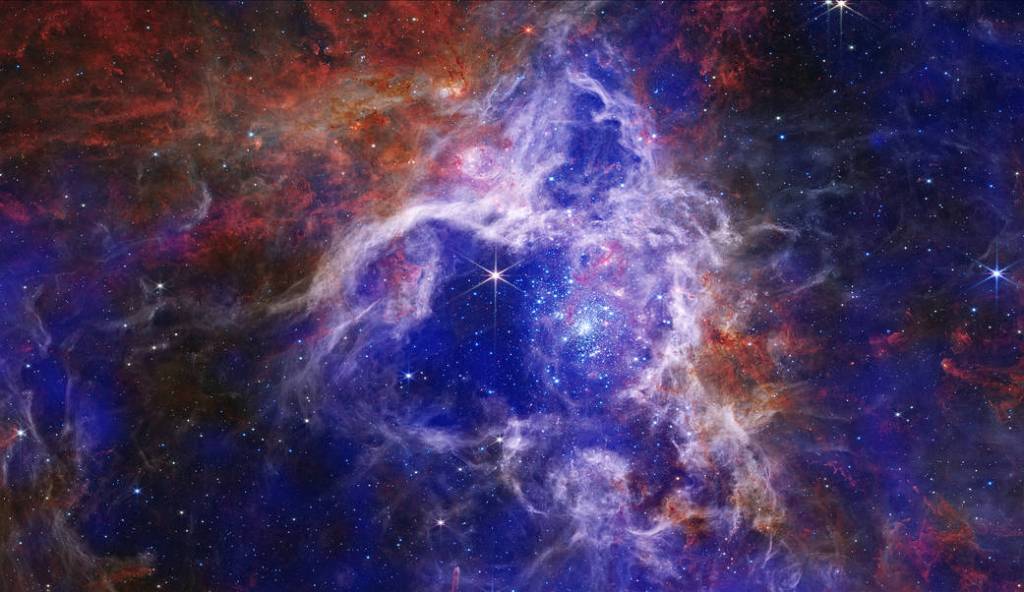
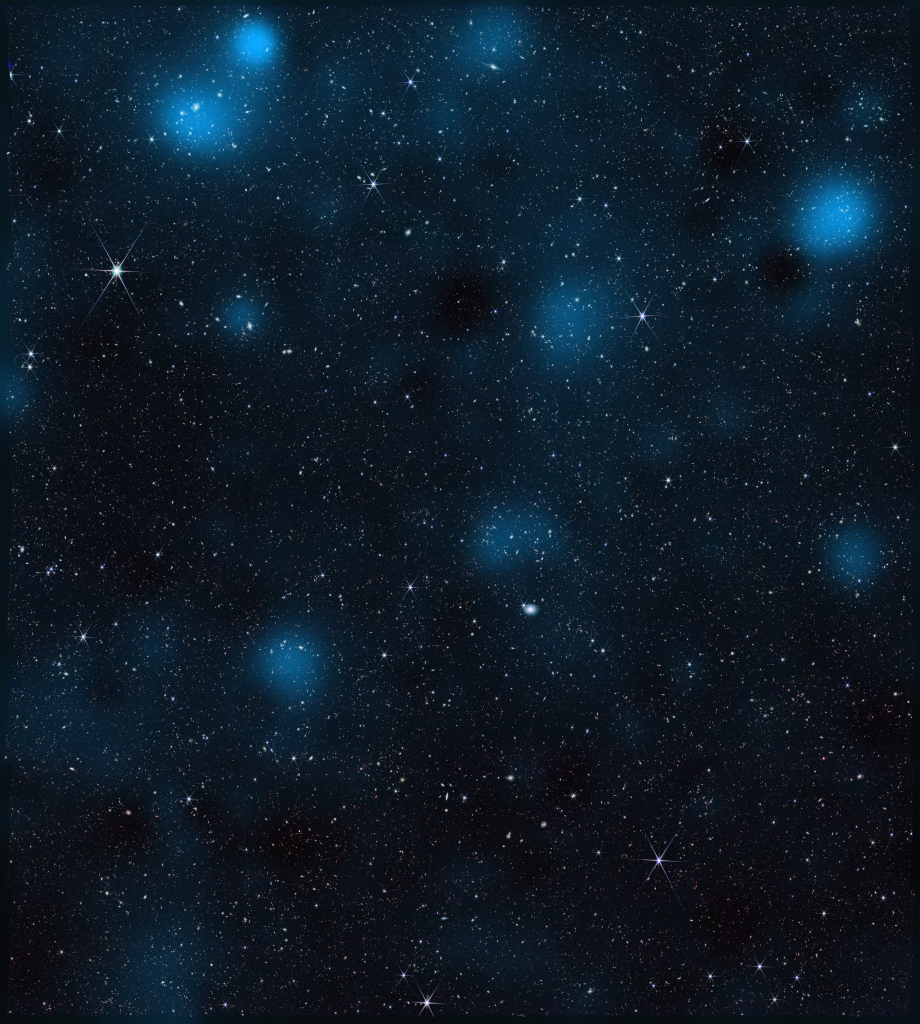
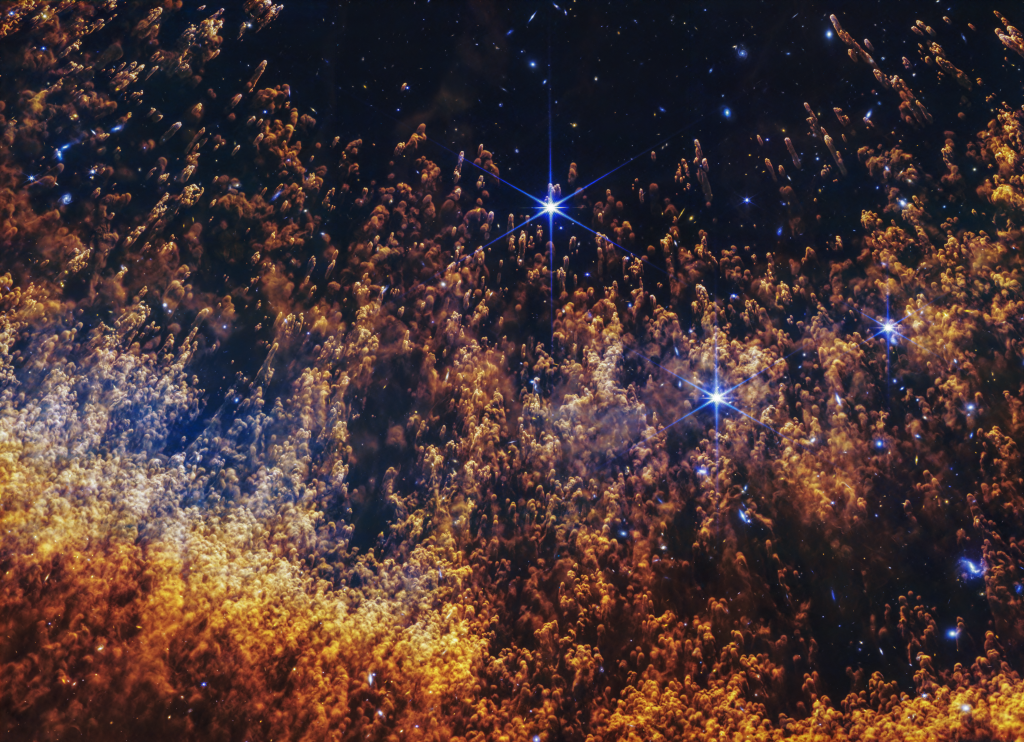
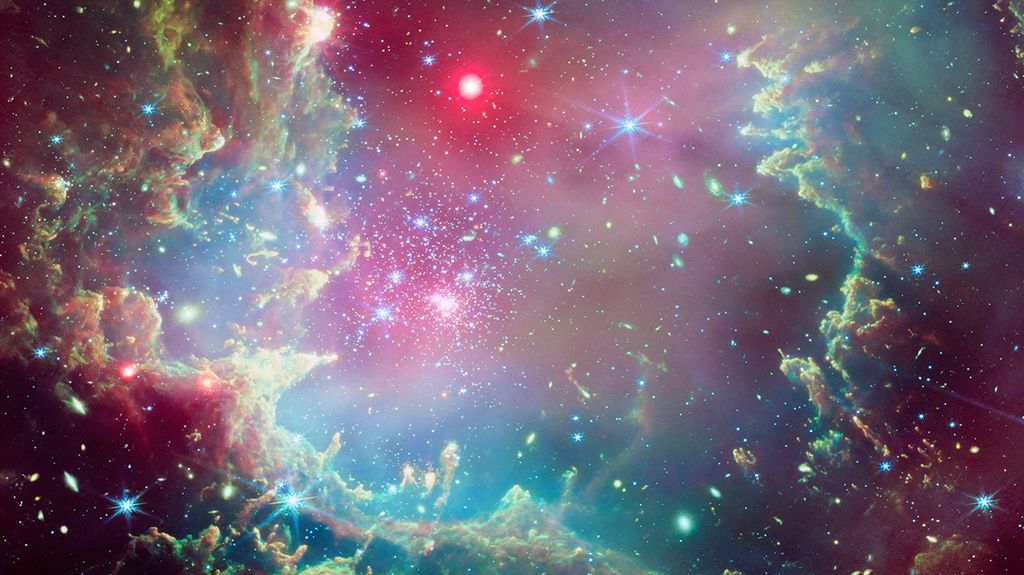
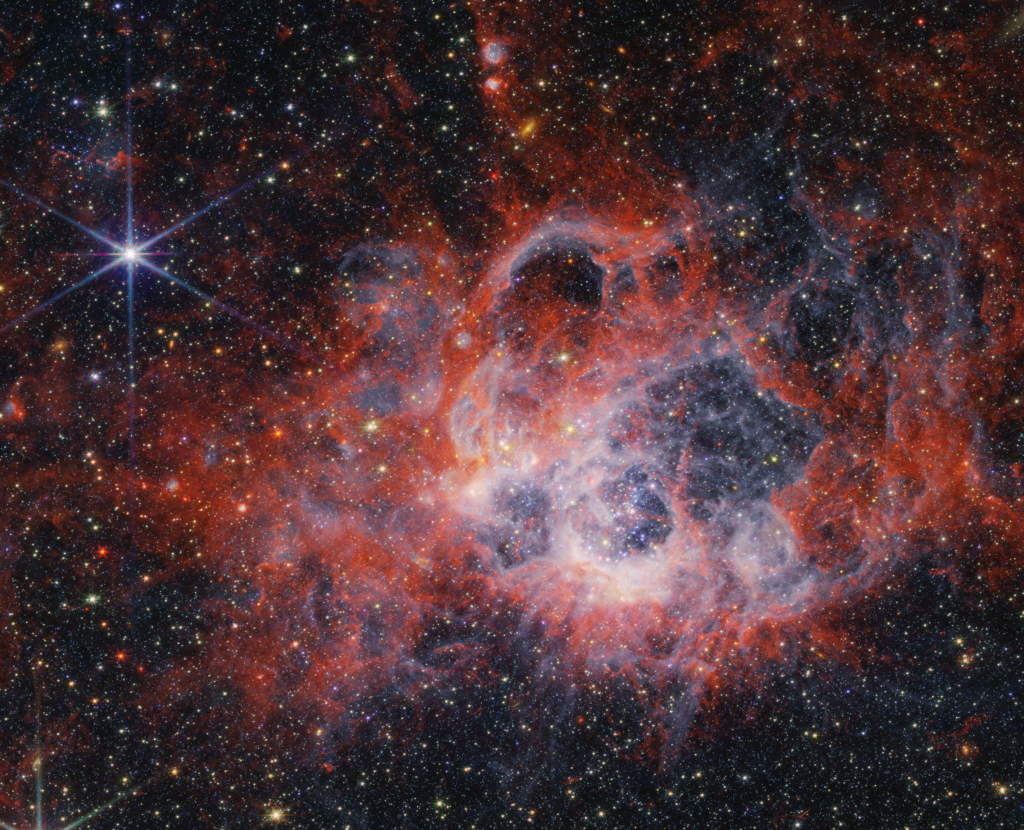
![Near the outskirts of the Small Magellanic Cloud, a satellite galaxy roughly 200 000 light-years from Earth, lies the young star cluster NGC 602, which is featured in this new image from the NASA/ESA/CSA James Webb Space Telescope. This image includes data from Webb’s NIRCam (Near-InfraRed Camera) and MIRI (Mid-InfraRed Instrument). The local environment of this cluster is a close analogue of what existed in the early Universe, with very low abundances of elements heavier than hydrogen and helium. The existence of dark clouds of dense dust and the fact that the cluster is rich in ionised gas also suggest the presence of ongoing star formation processes. This cluster provides a valuable opportunity to examine star formation scenarios under dramatically different conditions from those in the solar neighbourhood. [Image description: A star cluster is shown inside a large nebula of many-coloured gas and dust. The material forms dark ridges and peaks of gas and dust surrounding the cluster, lit on the inner side, while layers of diffuse, translucent clouds blanket over them. Around and within the gas, a huge number of distant galaxies can be seen, some quite large, as well as a few stars nearer to us which are very large and bright.]](https://www.nasa.gov/wp-content/uploads/2024/12/ngc602.jpg?w=1024)


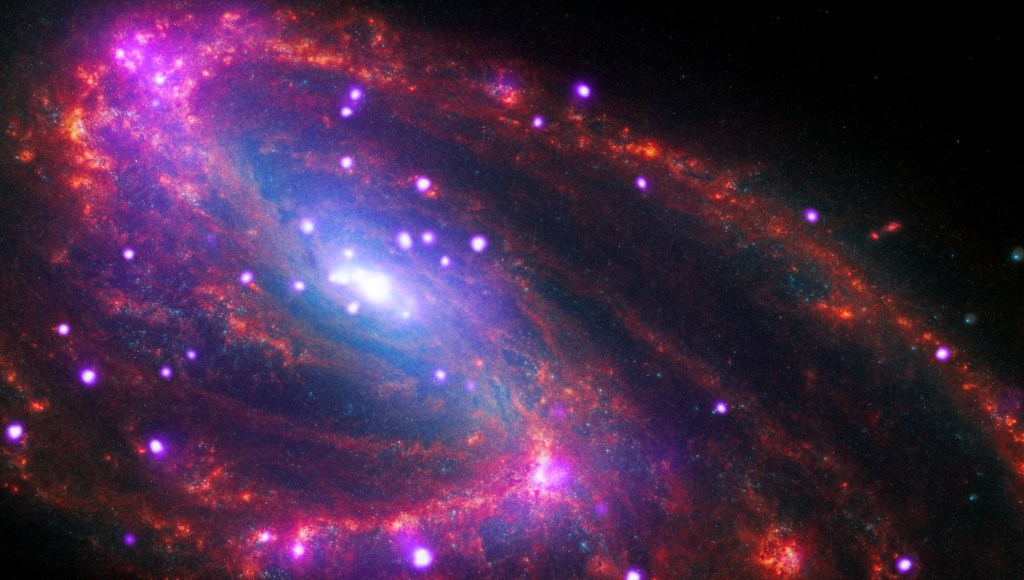
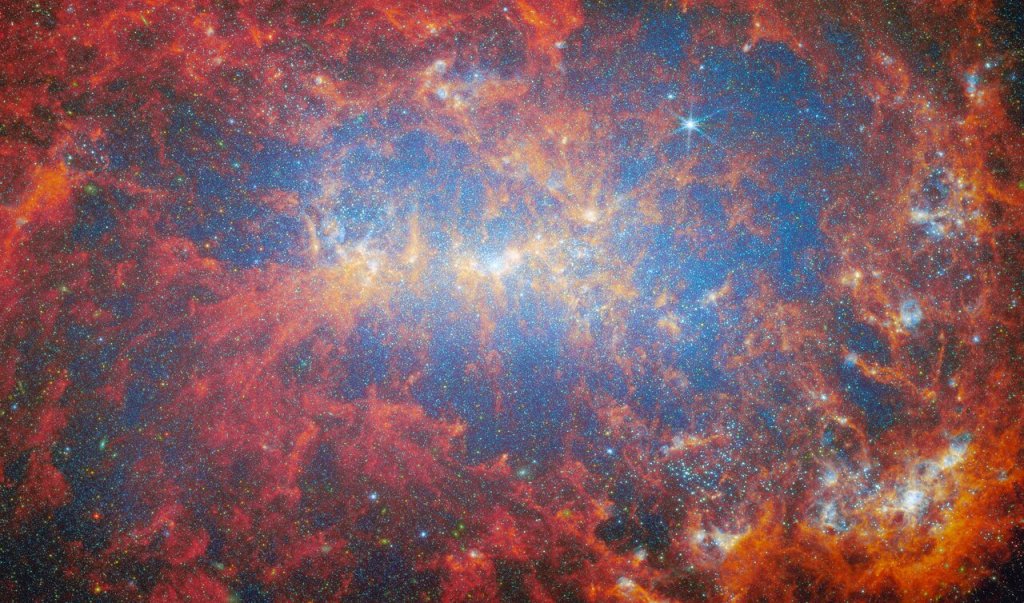



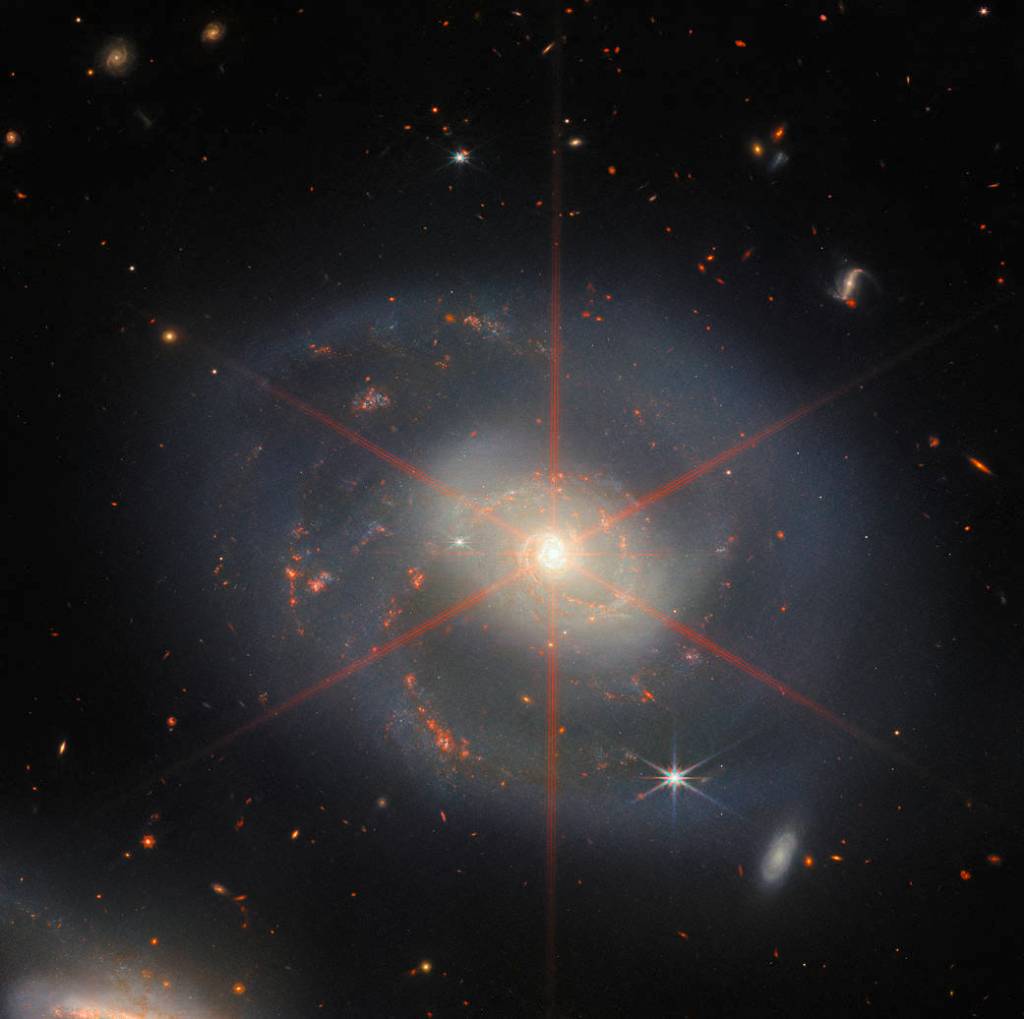
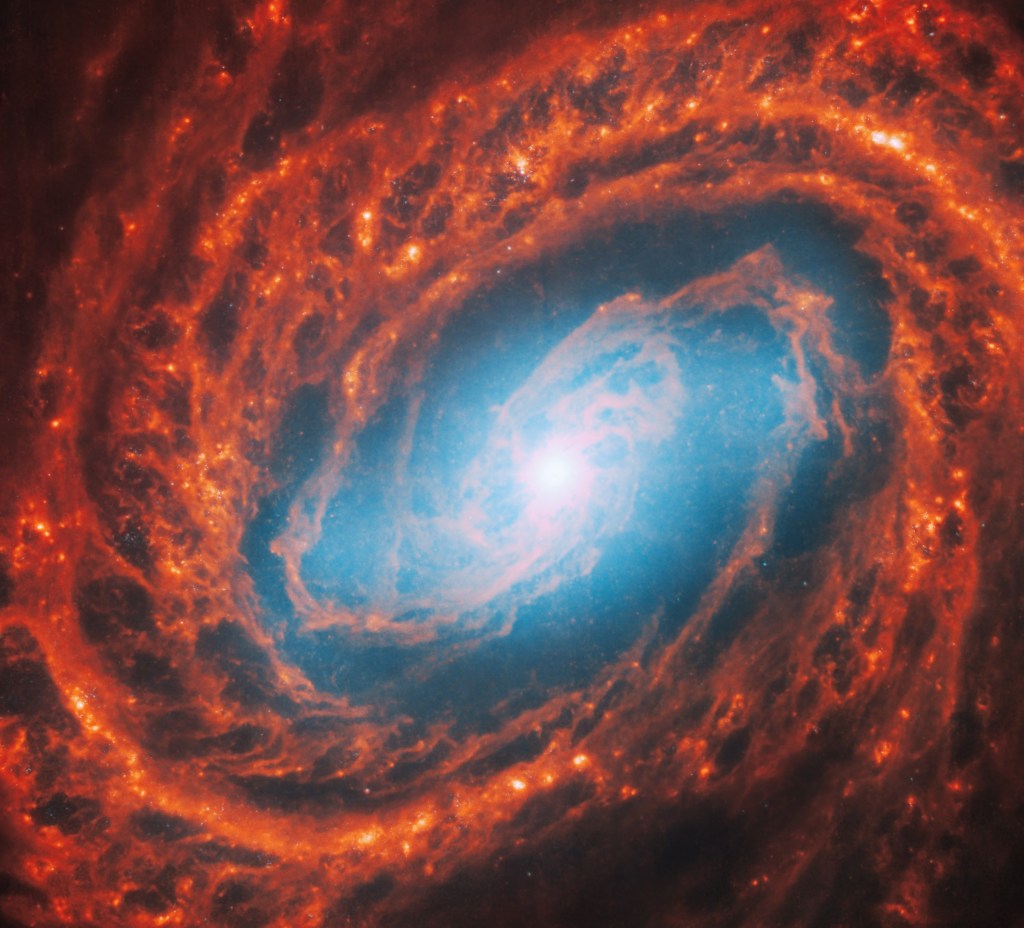
![This image taken by the NASA/ESA/CSA James Webb Space Telescope shows one of a total of 19 galaxies targeted for study by the Physics at High Angular resolution in Nearby Galaxies (PHANGS) collaboration. Nearby barred spiral galaxy NGC 1433 takes on a completely new look when observed by Webb’s Mid-Infrared Instrument (MIRI). NGC 1433’s spiral arms are littered with evidence of extremely young stars releasing energy and, in some cases, blowing out the gas and dust of the interstellar medium they plough into. Areas that once appeared dark and dim in optical imaging light up under Webb’s infrared eye, as clumps of dust and gas in the interstellar medium absorb the light from forming stars and emit it back out in the infrared. Webb’s image of NGC1433 is a dramatic display of the role that dynamic processes within the forming stars, dust, and gas play in the larger structure of an entire galaxy. At the centre of the galaxy, a tight, bright core featuring a unique double ring structure shines in exquisite detail, revealed by Webb’s extreme resolution. In this case, that double ring is actually tightly wrapped spiral arms that wind into an oval shape along the galaxy’s bar axis. NGC 1433 is classified as a Seyfert galaxy, a galaxy relatively close to Earth that has a bright, active core. The brightness and lack of dust in the MIRI image of NGC 1433 could hint at a recent merger or even collision with another galaxy.In the image of NGC 1433, blue, green, and red were assigned to Webb’s MIRI data at 7.7, 10 and 11.3, and 21 microns (the F770W, F1000W and F1130W, and F2100W filters, respectively). MIRI was contributed by ESA and NASA, with the instrument designed and built by a consortium of nationally funded European Institutes (The MIRI European Consortium) and NASA’s Jet Propulsion Laboratory, in partnership with the University of Arizona.[Image Description: A large galaxy takes up the entirety of the image. The core is mostly bright white, but there are also swirling, detailed structures that resemble water circling a drain. There is white and light blue colored dust that emanates from the core’s center, but it is tightly contained to the core. The rings are wispy and highlight filaments of dust around cavernous black bubbles. The dust in the outer rings contains dots that are navy blue, pinkish, reddish, and white.]](https://www.nasa.gov/wp-content/uploads/2023/06/weic2306a.jpg?w=1024)